kyste synovial
A synovial cyst (also known as a ganglion cyst or a periarticular cyst) is a small, benign (non-cancerous), fluid-filled sac that typically develops near a joint or tendon sheath.
While they are generally harmless, their location can sometimes cause pain or limit joint mobility.
🔬 Location and Formation
Section titled “🔬 Location and Formation”- Synovial Fluid: The cyst is filled with a thick, clear, jelly-like fluid called synovial fluid
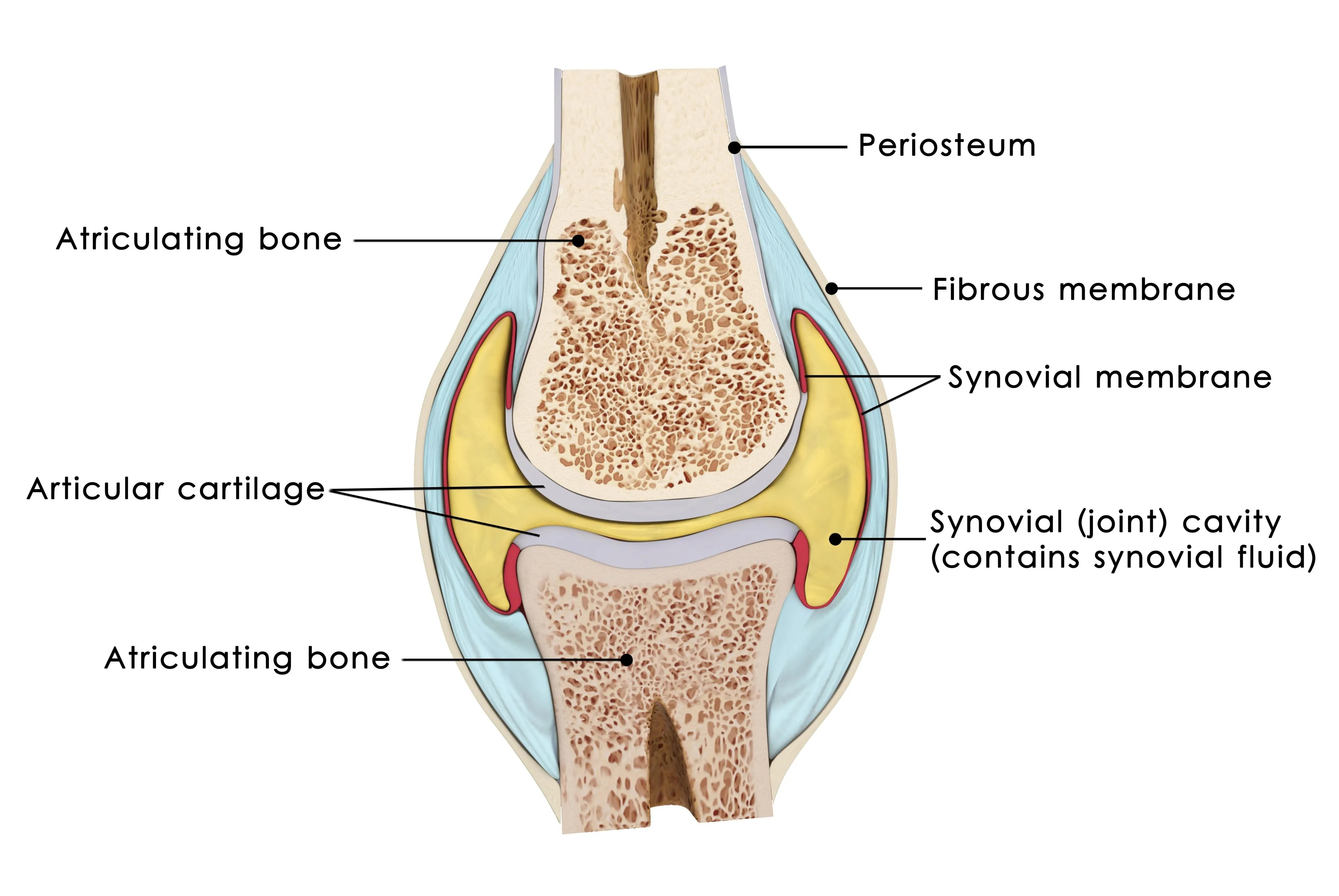 [Image of joint with synovial fluid]
, which is the natural lubricant for joints and tendons.
[Image of joint with synovial fluid]
, which is the natural lubricant for joints and tendons.
- Location: Synovial cysts most often appear in the wrist (especially on the back of the hand), ankles, and feet. They can also sometimes form near the knee joint (where they are called a Baker’s cyst).
- Cause of Formation: The exact cause isn’t always clear, but they are often linked to minor trauma, repeated stress on the joint, or underlying joint damage (like arthritis). They are thought to form when the synovial membrane of the joint or tendon sheath herniates (pokes out) like a small balloon and fills with fluid.
🏥 Symptoms and Treatment
Section titled “🏥 Symptoms and Treatment”Symptoms
Section titled “Symptoms”- Lump: The most noticeable symptom is a visible, palpable lump beneath the skin.
- Consistency: The lump is usually soft to firm, depending on how full it is.
- Pain: Many cysts are painless. However, if the cyst presses on a nearby nerve, it can cause pain, tingling, or muscle weakness in the area.
- Size Fluctuation: The size of the cyst can often change, becoming larger with increased joint activity and smaller with rest.
Treatment
Section titled “Treatment”Since synovial cysts are benign and often disappear on their own, initial treatment is usually non-surgical.
- Observation: Many doctors recommend simply watching the cyst.
- Aspiration: If the cyst is painful or limits motion, a doctor can drain the fluid using a needle (a procedure called aspiration). However, cysts often refill after aspiration.
- Surgery: If the cyst is recurrent, very painful, or interfering with nerve function, it can be surgically removed. Even after surgery, there is a small chance the cyst may return.
Of course. The use of castor oil for ganglion cysts is a popular home remedy, and it’s helpful to understand both the theory behind it and what the evidence says.
Here’s a breakdown of its potential usefulness:
The Theory: Why People Use Castor Oil
Section titled “The Theory: Why People Use Castor Oil”Castor oil is believed to be beneficial due to two main properties:
- Anti-inflammatory: It contains ricinoleic acid, a unique fatty acid which has been shown in some studies to have anti-inflammatory effects. Since a ganglion cyst can be associated with inflammation and irritation of the joint or tendon sheath, reducing that inflammation could, in theory, help shrink the cyst.
- Circulatory Stimulant and “Drawing” Agent: In traditional medicine, castor oil packs (a cloth soaked in castor oil applied to the skin) are used to increase circulation and lymphatic flow in the area. The idea is that this enhanced flow can help “draw out” toxins and break down the thick, jelly-like fluid (synovial fluid) inside the cyst, allowing the body to reabsorb it more easily.
How It’s Typically Applied
Section titled “How It’s Typically Applied”The most common method is to use a castor oil pack:
- Soak a small piece of flannel or soft cotton cloth in pure, cold-pressed castor oil.
- Apply the oil-soaked cloth directly over the cyst.
- Cover it with a piece of plastic wrap (to prevent staining).
- Place a heat source (like a hot water bottle or a heating pad on a low setting) over the pack. The heat is thought to help drive the oil into the tissues and enhance its effects.
- Leave it on for 30 to 60 minutes.
- This process can be repeated several times a week.
Some people also simply massage a few drops of castor oil into the cyst daily.
The Reality: Effectiveness and Evidence
Section titled “The Reality: Effectiveness and Evidence”It is crucial to have realistic expectations:
- Anecdotal, Not Scientific: There are no major scientific studies that conclusively prove castor oil can eliminate a ganglion cyst. The evidence is almost entirely anecdotal, with some people reporting success and others seeing no change.
- Surface-Level Action: The cyst is located under the skin, connected to a joint or tendon sheath. While castor oil has anti-inflammatory properties, it’s unclear how deeply these can penetrate to affect the cyst’s root cause. The benefit may primarily come from the moist heat of the pack, which can improve local circulation and relax tissues, rather than from the oil itself.
- Not a Cure for the Cause: Even if castor oil helps reduce the size of the current cyst, it does not address the underlying reason the cyst formed in the first place (often a weakness in the joint capsule or tendon sheath). Therefore, the cyst may return.
Safety Considerations
Section titled “Safety Considerations”- Castor oil is generally safe for topical use for most people.
- Always do a patch test on a small area of skin first to ensure you don’t have an allergic reaction.
- Do not use castor oil packs on broken skin.
- It is for external use only. Never consume castor oil to treat a cyst.
Conclusion
Section titled “Conclusion”Is castor oil useful? It can be considered a supportive, conservative measure rather than a proven treatment.
- It may help by reducing surrounding inflammation and improving local circulation when used as a warm pack.
- It is unlikely to “dissolve” a well-established cyst on its own.
- It is generally safe and non-invasive, so trying it for a few weeks is low-risk.
If you choose to try it, manage your expectations and combine it with other conservative approaches like rest and immobilization. If the cyst is painful, growing, or causing numbness, it is essential to consult a doctor for a proper diagnosis and to discuss more definitive treatment options.